IN FOCUS: The rapid rise of the Delta variant and how it is shaping Singapore’s COVID-19 fight
SINGAPORE: On May 31, Prime Minister Lee Hsien Loong signalled that a new, unsafe front had opened up in Singapore's battle confronting COVID-xix.
Information technology was non about the tightening or easing of restrictions, but a shift in strategy to contain a changing enemy.
"Unfortunately, we are too fighting new, more infectious variants of the COVID-19 virus," he said. "What does a more infectious virus mean for our fight against COVID-19? It implies that nosotros must continually adapt our strategies and heighten our game to proceed COVID-19 nether control."
Singapore, Mr Lee said, needed to do more of 3 things, and faster: Testing, contact tracing and vaccination against COVID-xix.
READ: Singapore 'on rail' to bring COVID-nineteen outbreak nether control; curbs may be eased after Jun 13: PM Lee
On Friday (Jun 18), Health Minister Ong Ye Kung said Singapore has raised its contact tracing, testing and quarantine capabilities as well as vaccinated a "good office" of its population.
"So I believe we are now able to put 'circuit billow' behind united states of america and proceed almost businesses open up while navigating a wave of transmissions, as we have only done over the past few weeks," he said.
Simply even as he signalled progress was being made, Mr Ong also sounded a cautionary annotation: "However, with the Delta variant, we still demand to be very careful of high-gamble settings, meaning enclosed, mask off, and lots of interaction, namely in F&B (places) and gyms."
It is easy to run across why the variants accept created a new dynamic for the government to deal with.
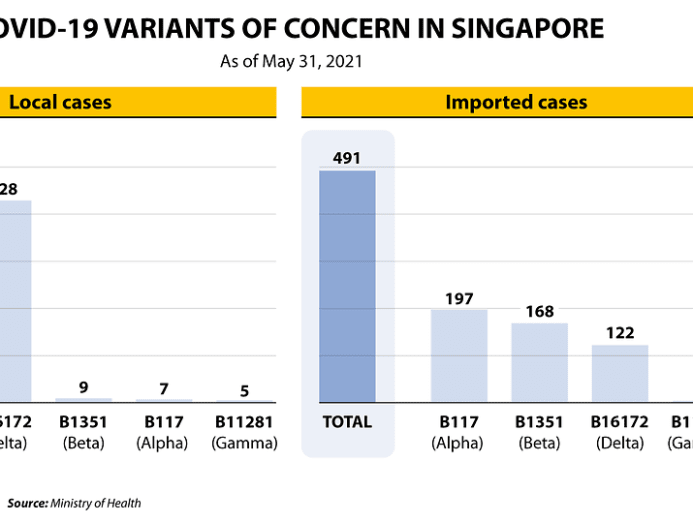
The Ministry of Wellness (MOH) told CNA on Friday that equally of the stop of May, it has detected 428 local COVID-19 cases with the more infectious B16172 variant – recently dubbed the Delta variant – of the coronavirus beginning detected in India.
The Delta variant has also been identified in 122 imported cases, MOH said.
The B1617 variant has been chosen a triple mutant variant since it is separate into iii lineages, including B16171 (Kappa) and B16172.
While MOH did non say when the first Delta variant example was confirmed in Singapore and which case this was, figures from the global epidemic tracker GISAID testify that the first Delta instance was detected here on April one.
The GISAID data did not indicate if this showtime case was local or imported.
From Apr 1 to May 31, MOH announced in its daily updates a total of 574 new community infections.
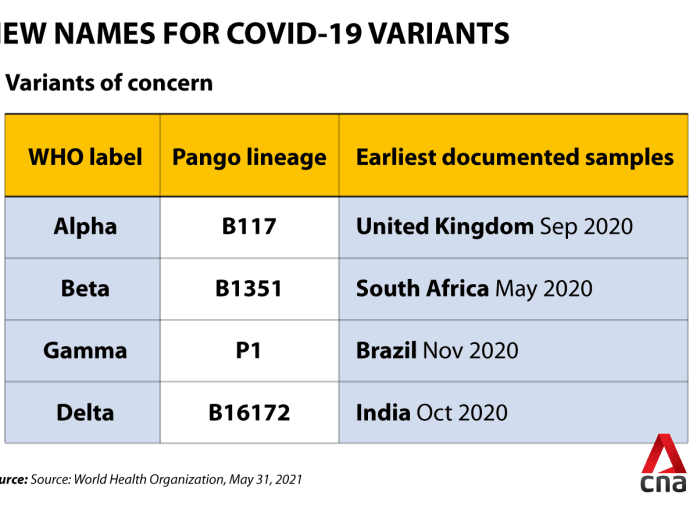
MOH figures too showed that every bit of May 31, nine local cases have the B1351 (Beta) variant first detected in South Africa, seven local cases accept the B117 (Alpha) variant kickoff detected in Britain, and five local cases have the B11281/P1 (Gamma) variant beginning detected in Brazil.
The World Wellness Organization (WHO) has identified these strains as "variants of concern" equally they are more transmissible, virulent, or resistant to public health measures or treatments.
READ: Is it all Greek to you? COVID-19 variants become new names
MOH also said early in May that three local cases take the Kappa variant.
The Kappa variant is a "variant of interest" under WHO'due south classification, meaning it has caused customs transmission and clusters, or has been detected in multiple countries.
MOH said the National Public Health Laboratory conducts viral genomic sequencing on all COVID-19 cases in Singapore to detect variants.
"Sequencing and analysis takes most seven days on boilerplate but it may take longer, particularly if there is a lower viral load in the swab specimens," a spokesperson said. "Due to the fourth dimension taken to carry out this procedure, variant cases will be reported as confirmed cases, just non necessarily every bit variant cases, in our daily press releases."
The spokesperson said sequencing is an ongoing procedure carried out meantime with "prompt public wellness activeness".
"The National Centre for Infectious Diseases (NCID) reports regularly to GISAID as and when the analysis is completed," the spokesperson added.
CHANGI Drome CLUSTER
The B1617 variant's relentless spread was highlighted in the Changi Airport cluster, which ballooned to more 100 cases in less than a month to become Singapore'due south largest agile COVID-xix cluster. The cluster was airtight on Fri afterwards going through two incubation periods without whatever new cases.
The cluster's index example, Case 62873, is an 88-year-old cleaner who worked at Changi Airdrome Concluding 3. He tested positive on May five despite beingness fully vaccinated.
While it remains unclear how exactly the variant reached Singapore, spread so quickly and infected other members of the public, there were some early clues.
TIMELINE: How Changi Airport became Singapore'south largest active cluster
Mr Ong Ye Kung said on May 14 that several cases linked to the airport cluster had tested preliminarily positive for the B1617 variant.
The infected airport workers mainly received travellers from loftier-gamble countries in the immigration and baggage claim areas, he said. These workers would then proceed to take their meals at the Final iii Basement 2 commercial expanse and nutrient court, where they likely passed the virus to the community, he added.
Initial manual could have occurred through an airport worker who had helped a family unit from Southward Asia, the Civil Aviation Say-so of Singapore and Changi Airport Group (CAG) said on May 21. The family later tested positive for the virus.
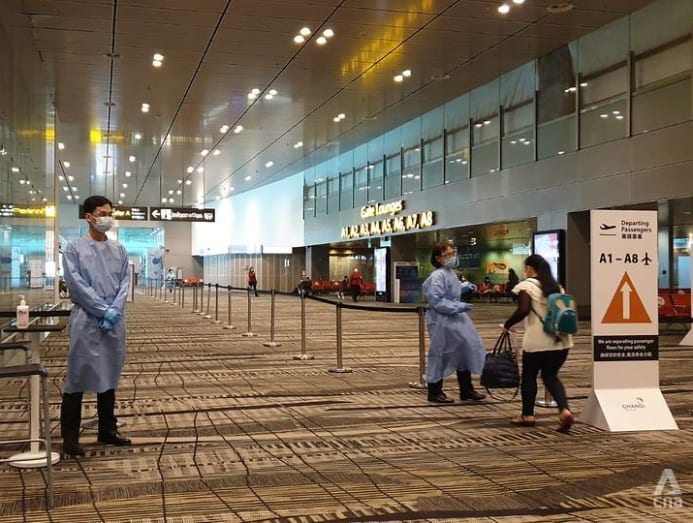
On May 24, CAG chief executive officeholder Lee Seow Hiang confirmed that the B1617 variant was part of what caused the cluster.
While the CEO said the airport had implemented "many layers of stringent condom protocols", he acknowledged that "something changed" with the B1617 variant.
"Information technology penetrated our defences and acquired a community outbreak," he conceded.
The Changi Aerodrome cluster had 108 cases as of Friday, with the almost recent cases reported on May 23.
OTHER NOTABLE CLUSTERS
Another big cluster linked to the B1617 variant was the ane that spread in Tan Tock Seng Hospital (TTSH). This remains Singapore's only COVID-19 cluster in a infirmary. The cluster is now closed.
A fully vaccinated 46-year-old female nurse at TTSH, or case 62541, became the start example linked to the cluster afterward she tested positive on Apr 27.
By May iv, just a week after the first case was discovered, the cluster had swelled to twoscore cases, MOH figures showed.
On the same twenty-four hours, MOH'south director of medical services Kenneth Mak confirmed that the nurse, along with iv others in the cluster, were infected with the Delta variant. Government are nevertheless investigating the source of the cluster.
READ: A timeline of the Tan Tock Seng Infirmary COVID-19 cluster
Until now, variant cases continue to emerge alongside new clusters.
MOH confirmed on Wed that one case in the new Bukit Merah View market cluster had tested preliminarily positive for the Delta variant. The cluster was first identified three days earlier on Jun thirteen with 4 cases linked to the food centre there. The cluster had 65 cases as of Friday.
Assistant Professor Hannah Clapham, who researches infectious diseases at the National University of Singapore'southward (NUS) Saw Swee Hock School of Public Health, said it was of import to study the clusters to learn about the Delta variant's transmission rate, where and how information technology was spreading, and the effectiveness of the measures against it.
"It would seem that the higher transmissibility of the B16172 variant did mean that information technology was able to evade the measures that were in place in Singapore," she said.
"It could also exist that every bit this variant was spreading globally, we saw more introductions of B16172 into Singapore and therefore this is the variant that spread."
READ: Delta variant fuelled 50% rising in England'south COVID-19 prevalence: Study
Other countries are also dealing with the new challenges presented past the more infectious variant.
Co-ordinate to GISAID, the UK had reported 46,890 Delta cases as of Friday, the highest number of confirmed cases in the world alee of India (6,684 cases) and the US (two,853 cases).
The Usa Centers for Disease Control and Prevention on Tuesday recognised the Delta variant as a "variant of concern", with top infectious diseases adept Dr Anthony Fauci encouraging everyone to go vaccinated, CNN reported. Dr Fauci pointed out that the Delta variant was in apportionment in the The states at a rate similar to the tipping indicate seen in the UK, where the variant has become dominant.
The United kingdom had announced on Mon that it would delay the easing of COVID-19 restrictions by another four weeks, until Jul 19, following a rising in cases and the growing spread of the Delta variant.
HOW MUCH More than INFECTIOUS?
Beyond the fast rate of infection, it is worth understanding how variants grade and how a particular strain gains authority over the rest.
There are thousands of unlike coronavirus variants circulating worldwide. Viruses mutate all the fourth dimension when replicating and virtually changes make no difference. Some fifty-fifty harm the virus.
But others tin can make the virus more infectious and the affliction more threatening – and these strains tend to dominate.
"The few mutations that give a virus an advantage, such equally being able to bind to the host cell better, tend to (let the variant to) survive and eventually supercede the other strains of the virus," Dr Paul Tambyah, president of the Asia Pacific Society of Clinical Microbiology and Infection, told CNA.
Then, while experts CNA spoke to agreed that the Delta variant is more infectious, how much more infectious exactly is information technology?
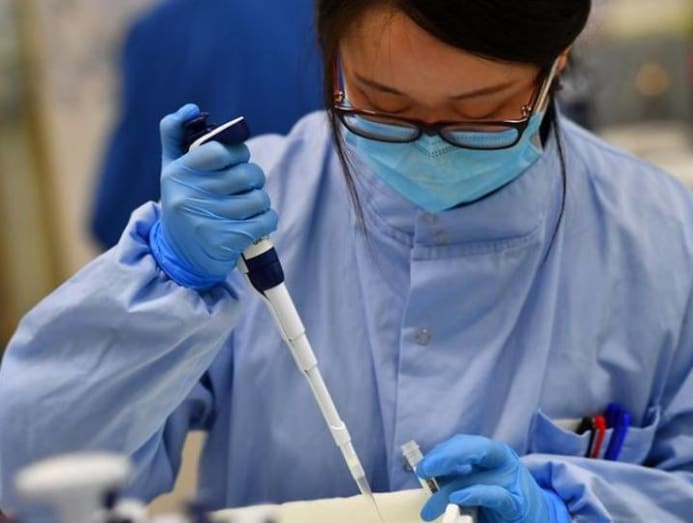
"PCR tests indicate that the corporeality of virus in the (Delta) samples is often higher than what nosotros come across earlier," said Professor Leo Yee Sin, executive director at the NCID.
"This could be 100- to grand-fold higher than expected, reflecting the millions of virus particles nowadays in each specimen. This high viral load in the respiratory tract may imply college transmission power resulting in a large number of cases and at faster speed."
Citing research coming out of the Great britain, Dr Tambyah said the Delta strain was associated with secondary infections in 13.5 per cent of cases with local manual. This is in dissimilarity to eleven per cent for the Gamma variant and viii.i per cent for the Alpha variant.
AIRBORNE TRANSMISSION OF VARIANTS
Another worry is the potential airborne transmission of variants.
While it has been established that COVID-19 infection primarily occurs through exposure to respiratory fluids conveying the virus, the science increasingly shows that the virus could also be spread by tiny particles suspended in the air.
COVID-19 multi-ministry task strength co-chair Lawrence Wong alluded to this on May 18 when recommending the wearing of masks with better filtration.
"Information technology's not but wearing a cloth mask, just wear one with high filtration capability – a surgical mask or 1 of those with the filter inserts," he said. "That is important because of the latest prove about the nature of the various strains, how transmissible they are and the fact that the spread can happen through aerosolised particles."
READ: Masks with improve filtration adequacy recommended equally new COVID-19 variants spread
Professor Laurent Rénia, who studies infectious diseases at Nanyang Technological University's (NTU) Lee Kong Chian School of Medicine, said the effect of airborne transmission is still a affair of debate in the scientific customs.
"Simply evidence is accumulating that short range droplets manual may occur," he said.
NCID's Prof Leo said the larger corporeality of virus excreted past Delta variant cases could be spread through various modes of manual, including direct contact, surfaces and airborne droplets.
"When a person sneezes or coughs, he or she produces a range of particles of different size and weight," she explained. "The very small and light particles can exist dispersed a longer distance away and some might linger in the air for a longer period of time."
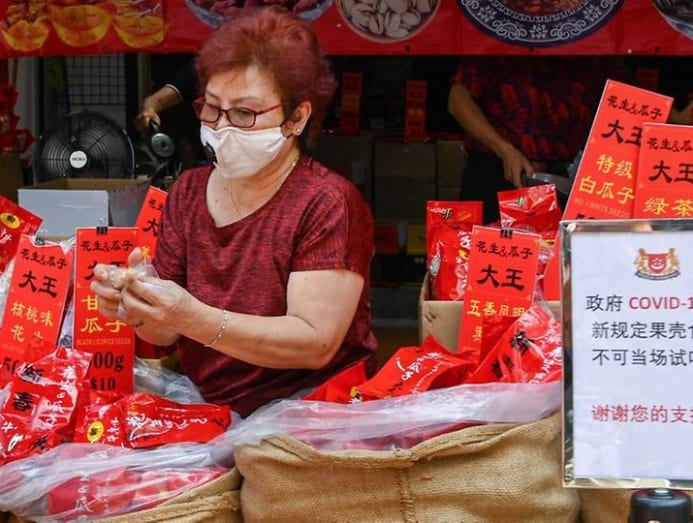
Professor Dale Fisher, senior consultant at the National University Hospital's (NUH) division of communicable diseases, believes the variants' more than infectious nature makes information technology seem similar transmission modes have inverse.
"What might look like a change in the mode of manual is really merely because the virus is less forgiving," he said. "Now, if an aerosol could have transmitted information technology before uncommonly, well maybe now it might be a little bit more common."
VACCINES Constructive AGAINST VARIANTS?
With the variants existence more than infectious and potentially spreading through the air, some have questioned how effective current vaccinations are against these strains.
Some studies take shown that vaccines are slightly less effective against the Delta variant, but the experts were quick to stress that the jabs still offered good protection and helped reduce severe affliction.
For instance, Dr Leong Hoe Nam, infectious diseases specialist at the Rophi Clinic, pointed to a U.k. study that showed the Pfizer-BioNTech shot was 88 per cent effective against the Delta variant 2 weeks after the second dose. The Pfizer-BioNTech jab has a usual efficacy of about 95 per cent, pregnant the take a chance of getting COVID-19 is 95 per cent lower after full vaccination.
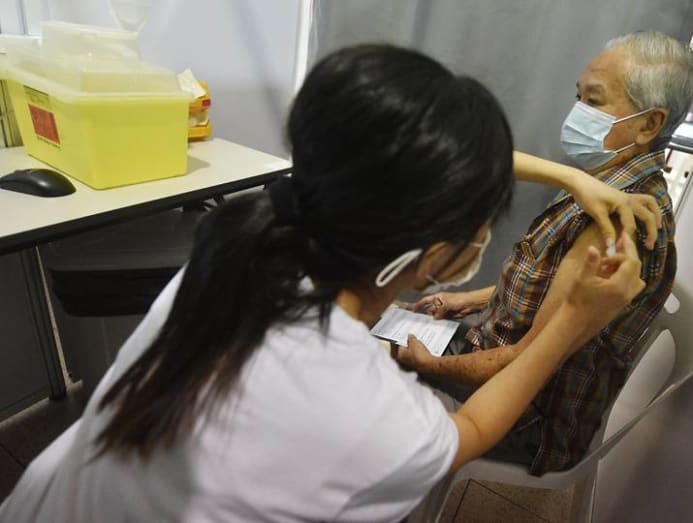
In the Delta variant clusters, Prof Leo has seen vaccinated cases with family members who accept tested positive. This means it could still be possible for vaccinated people to spread the virus.
"Genetic sequencing monitoring past the National Public Wellness Laboratory is notwithstanding ongoing and we cannot dominion out that a vaccinated patient is capable of transmitting the infection," she said.
Still, Dr Tambyah said a vaccine effectiveness of at least 80 per cent was "more enough to eliminate the virus somewhen when enough people are vaccinated".
"Vaccine breakthroughs occur with any virus, including the highly successful measles and chickenpox vaccines, but when plenty people are vaccinated, the breakthroughs are rare and of limited public wellness significance," he said.
Dr Tambyah said vaccines accept shown "time and once again" to be the only fashion to end an epidemic, including in smallpox and to a bottom extent polio and measles. "Careful vaccination strategies are needed to ensure that the community transmission of the virus in Singapore is significantly reduced," he said.
Forty-nine per cent of the population have taken their commencement doses of vaccination, and "slightly over" 35 per cent are fully vaccinated with both doses, Mr Ong said on Friday. Equally of Jun 15, more than 4.vii million doses of the COVID-19 vaccination have been administered in Singapore, he added. More than 2.7 million people have received at least ane dose of the COVID-nineteen vaccine.
READ: Singapore accelerates national COVID-19 vaccination programme, students the next group to exist inoculated
READ: 'Overwhelming' response for Sinovac COVID-19 vaccine at some approved clinics
Yet, the experts said Singapore's vaccination strategy could evolve as more than people got their jabs.
If evidence shows that the variants could "escape" the immune response induced past the vaccine or after natural infection, NTU'due south Prof Rénia said a booster injection of a new vaccine with proteins from the variants could be necessary.
Dr Tambyah also pointed to the possibility of the authorities introducing "band vaccination", when contacts of a single instance or small cluster are quickly vaccinated.
While this approach has withal to exist tried in the COVID-19 pandemic, it proved effective in mumps outbreaks on U.s.a. higher campuses, he said. "It may not work for secondary cases merely information technology will reduce further spread," he added.
TESTING AND CONTACT TRACING
Vaccination is just one brick in the wall keeping COVID-xix variants at bay. Testing and tracing strategies are set to evolve as the vaccination rollout progresses, the experts said.
Routine and large-scale testing for COVID-19 could get part of Singapore's new normal. Singapore is shifting its approach to testing, and this must be washed faster, more liberally and extensively, said Prime Minister Lee Hsien Loong in his televised speech in May.
On Jun 16, rapid self-test kits went on sale in pharmacies. These help discover and isolate persons quickly when they are almost infectious, and volition exist a "big aid" in slowing the spread of COVID-19, Mr Lee said.
With tests becoming faster and cheaper, routine testing could be done at more workplaces, restaurants and shopping malls, and for individuals like educators and taxi drivers whose jobs involve coming into shut contact with many people, he said.
FAQ: What you need to know about the new DIY COVID-19 antigen rapid examination kits
Singapore will as well contact trace more widely, Mr Lee said, with contact tracers working faster and better because they have more feel, skills and amend tools like TraceTogether and SafeEntry.
"I will exist looking out for how the testing and contact tracing parts of the strategy change as vaccination increases," NUS' Asst Prof Clapham said.
"One time we get to a very high proportion of the population vaccinated, we may worry less nigh asymptomatic infections, every bit we don't have the same run a risk of these infections leading to outbreaks of severe illness."
IMPROVING SAFETY MEASURES
Until so, organisations at ground zero of variant clusters continue to ramp upward safe measures. Both TTSH and Changi Aerodrome put in place restrictions on people inbound their bounds and completed at to the lowest degree one circular of testing for thousands of employees while also introducing other safety measures.
"We now know many of the cases infected with new variant strains of concern, including B16172, have college quantities of virus in their secretion," said Prof Leo, noting that the preventive measures so go "even more than important".
These include keeping the environment make clean and well ventilated, as well every bit reducing man-to-human contact, she added.
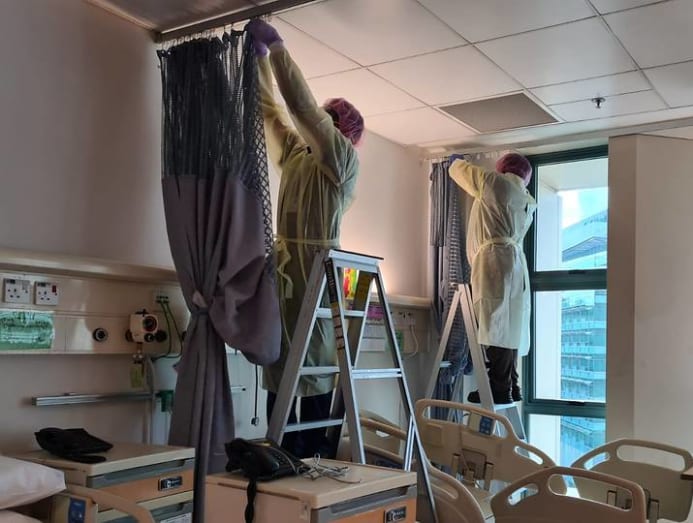
Dr Hoi Shu Yin, chief nurse at TTSH, told CNA that the infirmary is cleaning and auditing its wards for hygiene more frequently. "We also took steps to meliorate air ventilation in our wards by retrofitting all general wards and ward toilets with exhaust fans," she said, calculation that high-efficiency particulate air (HEPA) filters take also been installed.
Likewise, Changi Airport's terminals accept been fitted with HEPA filters that preclude stagnant air and ensure abiding air flow in a single direction. Drome workers are now segregated co-ordinate to their COVID-nineteen exposure risk, with no mingling between zones.
READ: Tan Tock Seng Hospital'south Ward 9D to resume admissions later enhancing safe measures
READ: Changi Airport to segregate workers based on COVID-19 exposure risk
Other loftier-gamble places are doing more as well. The Singapore General Hospital said staff working in wards are required to wear N95 respirators, rather than surgical masks, for "a improve mask fit".
The hospital is likewise swabbing non-vaccinated staff weekly and vaccinated staff every two weeks, its director of infection prevention and epidemiology Dr Ling Moi Lin told CNA.
"It is critical that we reduce the transmission of the virus rapidly with skillful public health measures … such as good hand hygiene and masking, acceptable ventilation likewise as increasing the percentage of vaccinated persons," said Dr Ling. "As long as there are viruses circulating, there is an opportunity for variants to develop and we need to remove that opportunity."
WHAT You lot Tin can DO
On a personal level, the experts said the proper wearing of masks that meet filtration standards is integral in fighting back against the more infectious variants.
In mid-May, wellness government recommended that people wearable masks with amend filtration among a spike in variant cases and the emergence of new clusters.
These masks, both single-employ or reusable, should have at least a 95 per cent bacterial filtration efficiency, said MOH at the fourth dimension.
NCID's Prof Leo reiterated that masks should closely and completely cover the olfactory organ and mouth. "If we sneeze or cough, do it with the mask on considering nosotros rely on the filtration part of the mask to limit the number of particles flowing out into the environment," she said.
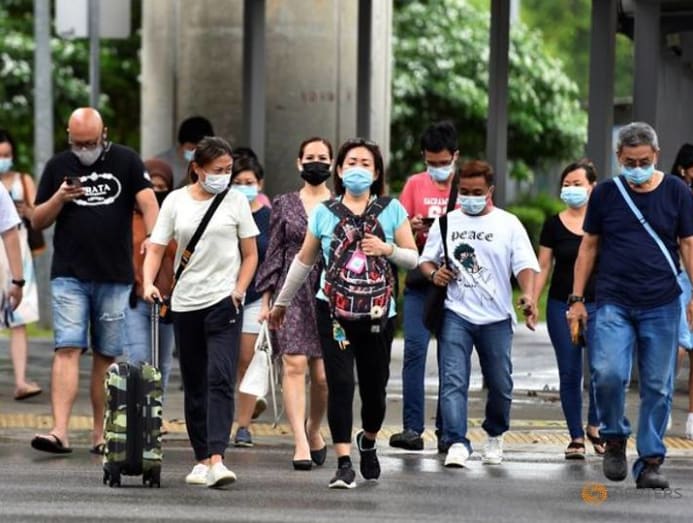
Beyond masks, Prof Leo said the usual measures still utilize: Mitt hygiene, staying habitation equally much as possible as well as early medical attention and testing.
"It is important to remember prevention measures work hand in mitt together. No one preventive measure tin piece of work solitary," she added. "Community resilience where everyone is doing their very best is key to combating SARS-CoV-2 that is elusive in nature."
To overcome the variants, NUH's Prof Fisher said people should adhere to the same measures, similar minimising contact with others, more than seriously.
"It's more than about doing all the things that we know and doing them well," he added. "So it'south really the same measures – they're only beingness (implemented) more than aggressively."
VARIANTS WILL CONTINUE TO EMERGE
Yet, the experts agreed that despite Singapore'south best efforts, different and new variants will probably continue to sally and re-emerge over time.
New strains that are even more transmissible and less virulent, significant they cause less severe disease, are "extremely likely" to sally, said Dr Tambyah.
"After a few years, the virus will probably become like one of the mutual cold viruses widespread but deadly only to the elderly and vulnerable," he added.
Dr Tambyah highlighted the Russian flu in the late 19th century every bit one example of this. It eventually became a seasonal coronavirus now seen regularly by doctors.
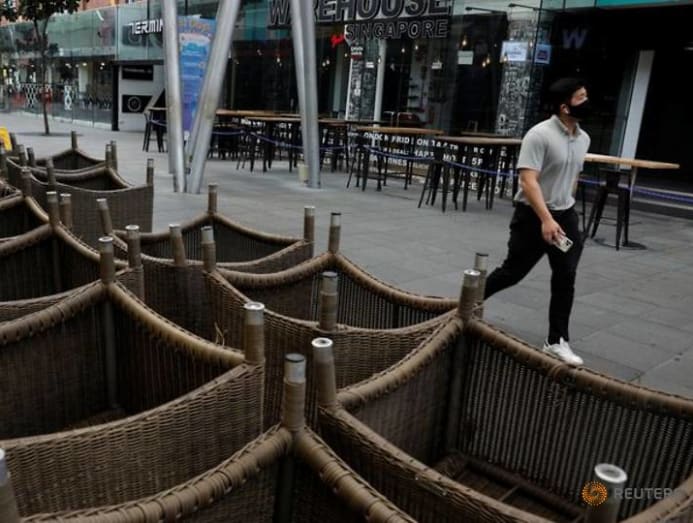
The experts stressed that new variant strains arise when viruses evolve to adapt and evade human defences, with each variant bringing different challenges.
"Most experts, including myself, believe that SARS-CoV-ii, dissimilar SARS-CoV (which caused the Severe Acute Respiratory Syndrome), volition stay with us," said Prof Leo. "It will continue to evolve and we humans will continue to develop defence mechanisms such every bit vaccines and treatment."
The human versus COVID-19 struggle is "expected to be dynamic" and "occasionally volatile with blips of resurgence" in cases, she said.
"Nosotros foresee ongoing restriction-relaxation to achieve some degree of residue allowing the healthcare organization to cope with the cases and the entire society to return to the desired state of productivity," she added.
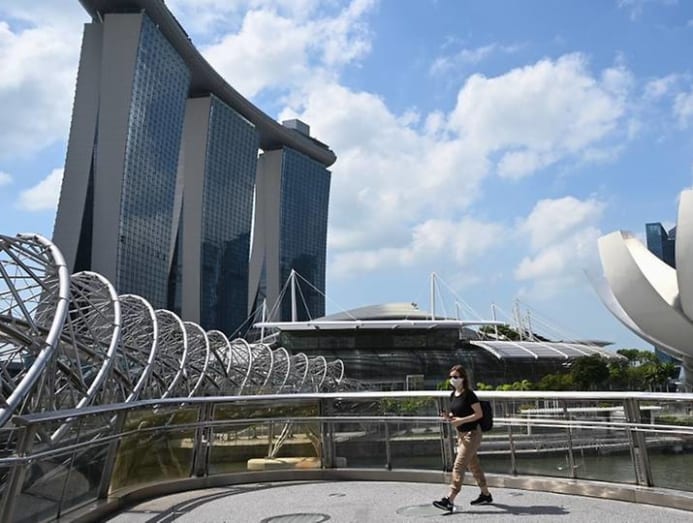
But Dr Leong at the Rophi Clinic warned against a lapse in measures like wearing masks and safe distancing, highlighting that the coronavirus could "mutate against the vaccine".
"The weaker nosotros are in this defence, the more likely replication and in turn mutations and variants announced," he added.
"Disorganised, one-half-hearted attempts are exactly the prescription for viral mutants."

Post a Comment for "IN FOCUS: The rapid rise of the Delta variant and how it is shaping Singapore’s COVID-19 fight"